By Analyst Team · Updated 2026-08-09 · 13 min read
Find the Best IPTV Service for Firestick in 2026
We tested, compared, and scored top IPTV providers. See our verified list now.
What is IPTV TV? If you have typed that phrase into Google, you are likely looking for a way to watch live television without a traditional cable contract. IPTV, or Internet Protocol Television, is television delivered over the internet instead of through broadcast signals or physical cables. That simple answer hides a lot of complexity. The market is crowded, the terminology is confusing, and the gap between a great IPTV subscription and a total headache is enormous.
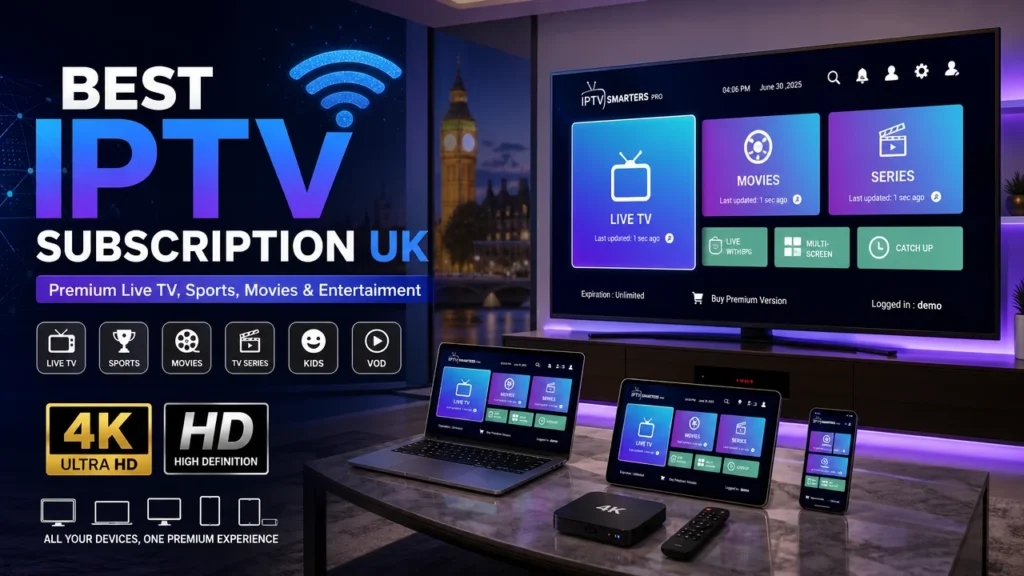
Before you buy anything, this guide walks you through exactly what you need to check. We will cover how IPTV works, where to buy IPTV subscription services safely, the warning signs that separate reliable providers from fly-by-night operations, and what the real IPTV vs cable TV comparison looks like in 2026. The interface you see above is what a modern provider looks like when it is done right: an organized EPG, crisp sports channels, and a clean layout across devices.
Why Many People Regret Their IPTV Purchase
Most IPTV regret stories share the same pattern. Someone sees a deal on Facebook or Reddit offering 10,000 channels for $12 a month, pays with a gift card or crypto, and within a few weeks the app stops loading, the channel list vanishes, or the service disappears entirely. Early reviews are glowing, and screenshots show every NFL game available in 4K. Then the provider vanishes or simply rebrands itself overnight.
Why does this happen? A huge share of the market is unlicensed. These services stream content without distribution rights. When copyright holders pressure hosting providers or domain registrars, channels drop quickly, and sometimes the entire server goes dark without a refund. Thousands of consumers are left feeling ripped off, and they are often too embarrassed or unsure to report it.
There are also legal IPTV providers that operate fully aboveboard. IPTV itself is not the problem. The problem is the buying process. Many people never learn how to verify a provider before handing over money. They do not check whether the service offers a trial, can show uptime statistics, or uses legitimate payment infrastructure. As a result, buyer's remorse begins the moment the stream buffers for the fifth time in one night.
The good news is you can skip most of this pain. You just need a clear checklist before you open your wallet.
What to Look for: Criteria That Should Drive Your Decision
Before you compare channel counts and monthly prices, build your own list of must-haves. Use these factors to evaluate any provider you come across:
- Trial period availability. A confident provider offers at least a 24-hour trial or a 7-day money-back guarantee. If the only trial is a vague "test server" channel, stay away.
- Server reliability and bandwidth. The best IPTV providers use multiple redundant servers with at least 1 Gbps uplinks to handle peak hours. Without that, you will experience freezing during big games.
- Channel quality and bitrate. Look for FHD and 4K options, but check the bitrate too. A 4K channel with a 4 Mbps bitrate looks worse than an FHD channel running at 8 Mbps.
- Device compatibility. The best IPTV service for Firestick, Android TV, smart TV, and iOS is the one that offers a stable dedicated app, not just something that works through a web browser.
- Electronic Program Guide (EPG). A good service includes a full EPG so you can see what is playing for the next 7 days, not just a channel name.
- Simultaneous connections. Know exactly how many devices you can watch at once. Retailer websites rarely show this clearly.
- Support response time. Reliable providers respond within a few hours or less. If support is unreachable, that is an instant red flag.
- Payment flexibility. Legal IPTV providers offer standard credit card payments. Crypto-only and gift-card-only payment methods are a huge warning sign.
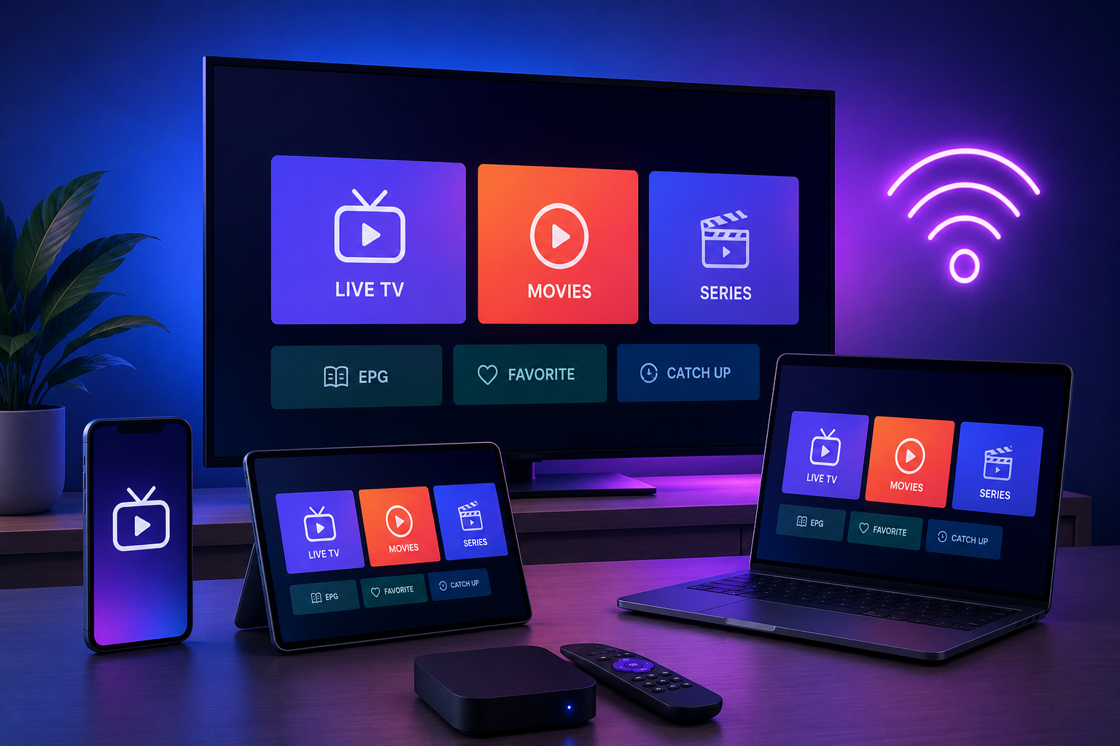
The image below shows how IPTV fits into the broader streaming landscape today. You see the same programming on the same TV, but the delivery method has changed completely. Cable hooks you to a physical network; IPTV hooks you to your internet connection.
What You Need to Know About the Current Market
The IPTV market of 2026 is deeply divided. On one side are legal IPTV providers like YouTube TV, Hulu Live, Sling TV, and Fubo that hold official content agreements. Those services typically cost between $40 and $75 per month and own their streaming infrastructure. On the other side are services advertising 10,000+ channels for a one-time fee or under $15 monthly. Most of these operate in a legal gray area or are outright unlicensed.
What changed recently? More governments have adopted stricter enforcement, and several popular unlicensed IPTV playlists have been shut down mid-season. That has led lots of people to ask, "Is IPTV legal?" The honest answer: the technology is legal. Internet Protocol Television is just a delivery method, and it does not require a license. What requires a license is the content itself. Distributing channels without rights agreements is illegal in most jurisdictions, and that distinction matters when you choose a service.
The market has also shifted toward reseller models. Resellers buy bulk subscription access and sell it to end users. They often oversell cheap plans and disappear when the upstream provider gets shut down. You can find genuine what-is-iptv-tv discussions in review communities, but be careful with Reddit threads because many are full of shill accounts promoting their own services.
Unlock complete high-definition information and priority access packs.
Claim This Special Offer for what is iptv tv →Questions to Ask Before Buying
Treat a sales conversation with an IPTV provider the same way you would treat a new internet plan. Ask direct questions and expect direct answers:
- Can I test the service before paying for a full month?
- What is your uptime guarantee, and what compensation do I get for outages?
- Which streaming devices are officially supported?
- Is there a native app, or do I need third-party software like IPTV Smarters or TiviMate?
- How many simultaneous streams does my subscription include?
- Can I upgrade or change my plan later?
- What data do you collect, and do you log IP addresses?
- What refund policy exists if the service shuts down or fails?
- Do you use your own servers or rent from third parties?
A reliable seller will answer every one of these directly. Send the questions via live chat or email and measure both response time and clarity. If you hear "we'll get back to you" more than once, treat that as a no.
For example, if you plan to watch on a television, ask specifically about how to set up IPTV on smart TV platforms like LG webOS or Samsung Tizen. Many services claim "smart TV support" but only hand you a Smarters code, which is not a real app. Make the setup requirement clear before you pay.
Warning Signs to Spot
Here are the most common red flags found in unreliable IPTV services:
"85,000 channels + 90,000 movies" is a marketing number, not a usable product.
After filtering dead links and duplicate feeds, you may be left with less than half the list. Providers that use quantity over quality rarely maintain their playlists, and the promise that impressed you at checkout will frustrate you during Sunday night football.
No trial and long-term plan pressure.
If a provider cannot give you a trial, they already know the service will not survive 24 hours of testing. Likewise, sellers who push 12-month packages hard are usually planning a cash grab. If they shut down next month, you get nothing back.
Refusal to accept standard payment.
Apps that only accept crypto, gift cards, or obscure payment processors make refunds impossible. You are essentially buying with zero consumer protection.
Comparison Table of Available Options
To make an informed decision, here is a side-by-side comparison of the primary ways people receive IPTV-style television in 2026.
| Option | Examples | Monthly Cost | Reliability | Best For |
|---|---|---|---|---|
| Legal live-TV streaming | YouTube TV, Hulu Live, Fubo | $40–$75 | Very high | Families and sports fans who want DVR and zero risk |
| Free ad-supported IPTV | Pluto TV, Tubi, Roku Channel | $0 | Very stable | Budget-conscious viewers and secondary TVs |
| Country-based ISP IPTV | Verizon Fios, Xfinity, Airtel | $30–$90 | Very high | People who want IPTV convenience bundled with internet |
| Unlicensed subscription IPTV | Various resellers found online | $10–$20 | Variable | Risk-tolerant tech users who understand the gamble |
As you can see, legal services cost more but buy you predictability. Unlicensed services are cheap but there is no guarantee you will even receive service for the full period you paid for. Resellers sit somewhere in between; some are excellent, but there is no practical way to verify quality in advance.
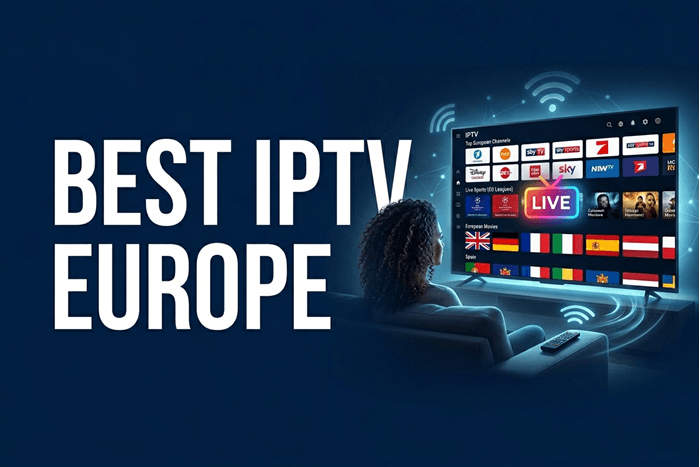
The map above is a useful reminder that server location matters. The strongest markets for IPTV remain the UK, Germany, Canada, and India. If you are looking for an IPTV channels list USA-focused plan, the provider's server position matters even more. For US customers, the lowest latency comes from servers in New York, Chicago, Los Angeles, or Dallas. Always ask where the server is located before you pay.
Recommendation by Budget and Needs
Budget Users (under $25/month)
If your goal is live news and basic entertainment, consider a hybrid approach. Pair an antenna for local channels with a legal streaming service like Sling for the channels you watch most. You get full legality, cloud DVR, and no freeze risk. If you decide to explore unlicensed IPTV anyway, limit the damage by buying month-to-month only and never paying a full year upfront.
Mainstream Households ($25–$75/month)
YouTube TV and Fubo are the strongest legal IPTV providers when you need many channels across several devices in one household. Both have unlimited-screenshot cloud DVR, support up to 6 accounts, and carry major sports networks. For general cable entertainment on a budget, Hulu Live is a solid midline. If you want a polished IPTV app experience on a Firestick, pair a legal service with a reputable player like TiviMate for the familiar guide-style layout.
Cord-Cutting Enthusiasts (Power Users)
Power users who want the largest possible channel selection at a low monthly cost often choose a combination: a legal base, plus one high-quality IPTV extension for live sports and international content. If you go this route, use a VPN, never pay annually upfront, and keep a legal backup option available for fight nights and playoff games.
Pros of Legal IPTV Services
- Reliable uptime with no sudden shutdowns
- Official customer support via phone and chat
- Licensed content streamed at consistent bitrates
- Transparent refund and cancellation policies
Cons of Legal IPTV Services
- Higher monthly fees than gray-market options
- Fewer international and niche channels
- Regional licensing limits certain games
- Some content disappears when contracts renew
How to Maximize Your Investment
Once you have chosen a subscription, follow these tips to protect your money and get the most out of the experience:
Use a wired connection where possible.
Wi-Fi causes packet loss and frame drops during live sports. If your streaming device cannot reach your router with an ethernet cable, move it closer to the node or upgrade to a Wi-Fi 6 mesh system.
Run IPTV through a VPN.
Even with a legal service, a VPN reduces ISP throttling and improves privacy. If you are testing a gray-market service, a VPN is nearly mandatory because ISPs often block or throttle popular IPTV endpoints.
Configure your EPG properly.
Spend 15 minutes on channel grouping, favorites, and EPG mapping. You will save hours of scrolling later. On Firestick, TiviMate remains one of the best IPTV players for the home screen feel.
Reboot your router monthly.
Cheap routers with small NAT tables drop long-lived IPTV connections every 48 hours. A monthly reboot keeps your network table fresh and your streams stable.
Use catch-up TV when available.
Many quality services include catch-up, letting you watch a show that started 30 minutes ago. It is like a personal network DVR. If your provider offers it, make sure you know how to find it in the app.
Track renewal dates manually.
Mark the renewal date in your calendar and re-evaluate each month. Do not enable auto-renewal until you are confident in the service after at least a full billing cycle.
Final Subscription Window:
Claim This Offer Today →Affiliate Disclosure: Clicking this secure link verified by our network supports our team through standard partnership terms at zero extra cost to your invoice.
Frequently Asked Questions
What is IPTV TV, exactly, and how does IPTV work?
IPTV stands for Internet Protocol Television. Instead of receiving a broadcast signal through coaxial cable, satellite, or an antenna, you receive video packets over your internet connection. A set-top box, smart TV app, Firestick, or mobile app decodes those packets and displays them as live TV. The same content may be watched live, on-demand, or with a time-shifted catch-up feature, depending on the provider's platform.
What is the best IPTV service for Firestick in 2026?
The best IPTV service for Firestick depends on whether you want a legal streaming service or a gray-market IPTV app. For legal options, YouTube TV and Sling TV have excellent Firestick apps with a clean guide and reliable playback. For premium IPTV apps, TiviMate and IPTV Smarters Pro are the most stable players to use with a subscription. The key is choosing a provider whose servers are fast enough for your connection, so latency does not ruin your experience.
IPTV vs cable TV: which is better in 2026?
IPTV wins on flexibility, device compatibility, and price in most comparisons, while cable still wins on raw reliability and local channel strength. Cable television also bundles with internet plans, which can simplify your bill. The honest answer is that legal IPTV offers a very similar experience to cable at a similar price, while unlicensed IPTV is cheaper but carries the risk of shutdowns and illegal content. For most households, a combination of legal IPTV plus an antenna is the best balance.
Is IPTV legal in the USA?
IPTV technology itself is completely legal in the USA, and many licensed services use it every day. The legality depends on content rights. Services like YouTube TV, Hulu Live, and Fubo have negotiated distribution agreements, so they are fully legal. Unlicensed services that rebroadcast premium channels without permission violate copyright law and can be shut down at any time. Users are rarely prosecuted, but the service itself remains unlawful, and you may lose your subscription overnight.
How do I set up IPTV on a smart TV?
Setting up IPTV on a smart TV usually requires installing a compatible IPTV player. On LG webOS and Samsung Tizen, popular players include SmartOne IPTV, IPTV Smarters, and SS IPTV. You enter the playlist URL or Xtream Codes provided by your subscription, then select the channels you want to add to favorites. Some services offer native apps, which are always easier. Before buying a subscription, ask exactly how the provider expects you to use it on your smart TV model.
Where can I safely buy an IPTV subscription?
The safest place to buy an IPTV subscription is from a regulated provider like YouTube TV, Fubo, Hulu Live, or Sling TV, because your payment is processed normally and refunds are protected. If you want a more niche IPTV experience, look for a provider that offers a free trial, accepts standard credit cards, publishes uptime stats, and has responsive support. Avoid any service that insists on crypto payments or non-refundable yearly plans.
What is typically included in an IPTV channels list USA?
A standard USA-focused IPTV channel list includes local broadcast networks like ABC, CBS, FOX, and NBC, plus cable favorites like ESPN, CNN, HBO, Discovery, AMC, FX, and TNT. Premium plans often add sports packages, regional sports networks, and international channels from Latin America, Europe, and Asia. The exact list varies significantly between legal and unlicensed providers. Licensed services clearly state their channel lineup on their website, while unlicensed services list hundreds of channels that may not all be live or stable.
Can I trust IPTV recommendations from Reddit?
Reddit is a useful place to learn about IPTV, but it is also heavily polluted by seller shills. Many highly upvoted posts are organized by reseller teams trying to build credibility. Take note of any recommendation that names one service repeatedly or posts the same channel list across subreddits. Instead, use Reddit to learn terminology, discover which apps to pair with a service, and understand common failure points before you test providers yourself.