By Jordan M. · Updated 2026-08-15 · 9 min read
Streaming live TV over the internet is called IPTV (Internet Protocol Television), and it's one of the fastest-growing ways people watch television. The setup you see above — a TV, a streaming box, and a clean on-screen guide — is what a licensed IPTV service looks like in practice.
So, is IPTV legal? The technology is completely legal. The confusion comes from the fact that "IPTV" covers two very different kinds of services: licensed IPTV providers that pay broadcasters for the right to carry their channels, and unlicensed services that rebroadcast TV signals without any agreement. One works like cable, the other is essentially digital piracy.
This article compares those two options head-to-head. By the end, you'll know how to identify a safe IPTV subscription, how to stay on the right side of the law in the USA, and what your money is actually buying with each type of service.
Why the "Is IPTV Legal" Question Is So Common
Most people start looking for IPTV when they're sick of high cable bills. A slick website offers thousands of channels and every premium sports package for around $10 to $15 a month. That price is only possible when the provider isn't paying content owners, which makes it illegal in most countries, including the USA.
That puts buyers in a tough spot. There are no boxes on those sites that say "unlicensed" or "pirated." Many services look professional, have clean interfaces, last for years, and are never shut down. Others get cut off in the middle of a big game. You can't tell by the channel list alone — you have to evaluate the provider differently. That's the choice problem this guide helps you solve.
What Actually Separates Legal IPTV from Illegal IPTV
Instead of memorizing a list of "approved" names, learn the criteria that separate legitimate services from grey-market operations. Use these whenever someone tells you they know where to buy legal IPTV.
- Content licensing. Legal IPTV providers hold or acquire broadcasting rights, or partner with networks that do. If a service lists live ESPN, Fox, CNN, and TNT for a few dollars a month, ask how they obtained the rights.
- Official app availability. Legal services appear in official app stores on Roku, Fire TV, Apple TV, and smart TVs. Illegal services often require sideloading, activation codes, or a pre-loaded Fire Stick.
- Payment process. Legal services bill through normal processors with transparent pricing and tax. Unlicensed ones may prefer crypto, prepaid cards, or cash apps because chargebacks hurt them.
- Accountability. Legal providers advertise under a registered business, offer refund policies, and provide customer support. Illegal providers hide behind Telegram groups and anonymous email addresses.
- Price structure. A $10-per-month service with every premium network is an impossible price legally. Not all legal IPTV is expensive, but prices that look too good to be true usually signal unlicensed content.
- Contract terms. Legal services let you cancel anytime or at the end of a billing cycle. Illegal providers rarely give you any terms at all.
IPTV Legal vs Illegal: Head-to-Head Comparison
Here's the core comparison between licensed IPTV (Option A) and unlicensed IPTV (Option B), using factors that determine your experience and your legal exposure.
Notice one thing: the unlicensed option only wins on raw price and channel count. Every category that protects your time, your money, and your devices leans toward a properly licensed provider. When people search for IPTV legality explained, this is the full picture — the stream may look identical, but the legal status does not.
Option A — Licensed IPTV Providers (The Safe Route)
Option A includes services you already know: YouTube TV, Hulu + Live TV, Sling TV, DirecTV Stream, Fubo, and Philo, plus add-ons through Amazon Prime Video Channels and Apple TV. All of these are IPTV in the technical sense — they send live TV over your internet connection — and all of them are legal.
When people ask where to buy legal IPTV, the answer is usually one of these mainstream platforms. When you start comparing legal IPTV providers 2025 lineups, you'll notice the same few names repeated year after year, and that's a good sign. They may be less flashy than 20,000-channel services, but they offer consistent streams, cloud DVR, multiple screens, and real customer support. Best legal IPTV service lists change every season as channel lineups move between platforms, so compare current plans before you subscribe.
✓ Benefits & Pros
Fully legal and copyright-compliant
Stable, high-quality streams with DVR
Official apps, no sideloading needed
Real customer support and refund policies
Works across multiple devices and profiles
✗ Limitations & Cons
Higher monthly cost than illegal feeds
Bundles include channels you may not watch
Regional sports blackout rules still apply
Lineups change, and prices rise over time
Option B — Unlicensed IPTV Services (The High-Risk Route)
Option B describes the grey-market services you find through social media ads, Telegram groups, or sellers who promise a "fully loaded" Fire Stick. Many rely on systems like Xtream Codes, M3U playlists, or custom-built apps. Instead of owning broadcast rights, they scrape or steal feeds from legitimate sources, repackage them, and sell access. That's why the price is so low.
IPTV legality explained from the enforcement side: rebroadcasting protected content without permission breaches copyright law in the USA and most other countries. Providers get shut down periodically, and in some cases users of these services have been identified or fined, especially when streams are used commercially. From a practical view, however, the most immediate risks are financial and technical — stolen card numbers, malware, and services that vanish without notice.
✓ Benefits & Pros
Very low monthly price
Massive channel count, including PPV
No annual contract or commitment
Easy to try without long-term commitment
✗ Limitations & Cons
No legal protection if the source is sued
Malware and payment data theft risk
Streams buffer or get cut during big events
Service can disappear overnight
Often needs sideloading and VPN workarounds
RECOMMENDED RESOURCE
is iptv legal
See current details, seasonal promos, and full tier packages.
Learn more about is iptv legal →
When you evaluate a provider, don't judge it by the polish of the interface shown above. A clean grid of sports and movie channels can be assembled from stolen streams just as easily as from licensed ones. Check the provider's business details, not the quality of its screenshot.
Best Option by Budget
If your goal is to spend as little as possible while staying legal, this section shows how to find legal IPTV that fits your actual budget. Layer free apps before buying anything: Pluto TV, Tubi, The Roku Channel, Freevee, and Samsung TV Plus are fully legal live-streaming services supported by advertising. In the USA, an antenna connected to an HDHomeRun tuner brings in local channels for free too.
At the paid level, Philo is usually the least expensive mainstream legal IPTV service for entertainment channels, while Sling TV offers a cheaper path into major sports and news networks. Hulu + Live TV and YouTube TV cost more but include the largest channel packages and the most reliable sports experience. Whatever you choose, keep it under one roof instead of stacking several single-channel apps that add up.
Best Option by Experience Level
Beginners and non-technical households should stick with licensed IPTV only. The apps install from official app stores, behave predictably, and don't require VPN setup, playlist updates, or code activation. A service that requires a coded "activation" from a Telegram seller is a warning sign, not a feature.
Experienced users can still get value from legal IPTV, but they have more options: combine an antenna with a network tuner, run a home media server like Plex, and subscribe to a legal IPTV package strictly for channels the antenna can't receive. Advanced players like TiviMate work fine with legally obtained IPTV playlists — just remember that the legality comes from the source, not the player.
How to Check Any IPTV Provider in 5 Steps
Still unsure whether a particular service is safe? Run it through these five checks before handing over any payment details.
- Search for the company name plus "terms of service" and "privacy policy." A registered operation has both. A Telegram channel doesn't.
- Open the official app store on your device. If the app isn't there but the service offers an APK download, treat that as a red flag.
- Look up the channel owners. Pick a network that the service lists, then visit that network's official site and see which providers it names as authorized. If your provider isn't listed, the rights likely don't exist.
- Pay with a mainstream credit card. If the provider only accepts crypto, prepaid cards, or payment apps, ask why. Legal services don't need to hide their billing.
- Compare the price to mainstream legal IPTV prices. If it's dramatically lower, the content isn't licensed — that's the whole trick.
Unlock complete high-definition information instantly here.
Explore is iptv legal Plans →Recommendation by User Profile
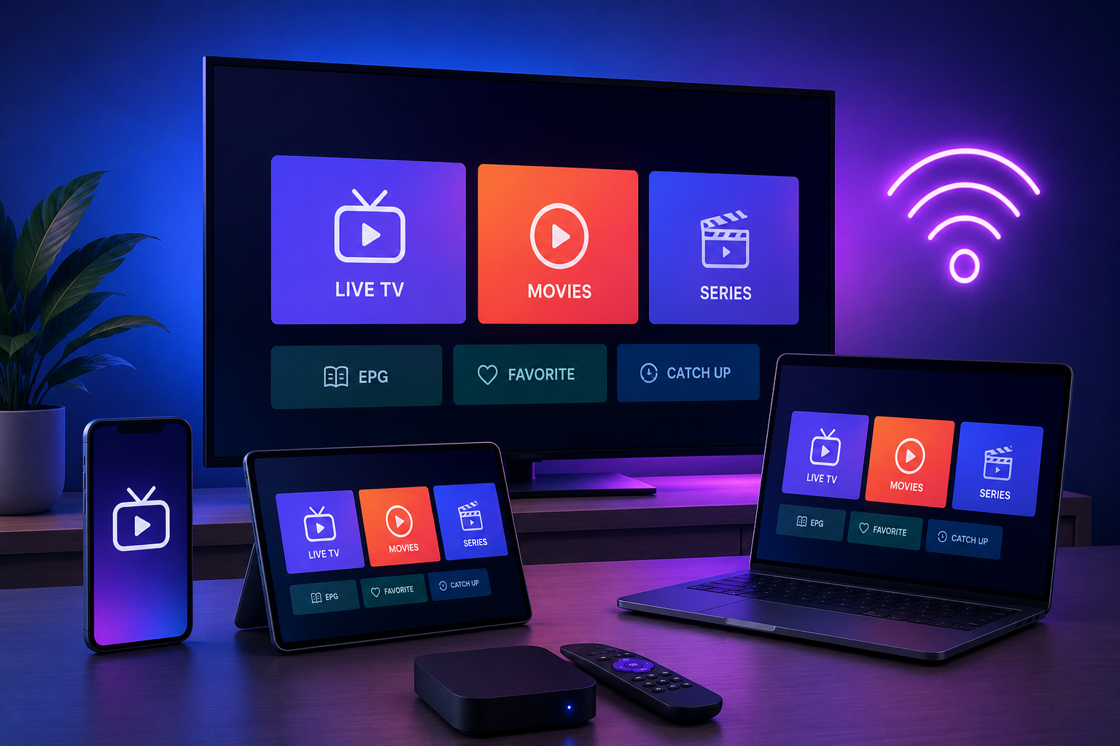
The easiest final check is the home screen of the device you plan to use, like the one below. If you can open the app store and find the provider listed there, you're almost certainly looking at a legal IPTV app. If you need to sideload it, you already have your answer.
Here's how the choice shakes out for common viewer profiles:
- Cord cutters replacing cable: Choose a licensed IPTV service like YouTube TV or Hulu + Live TV. You get the live channel experience with a real DVR and no risk of losing the service mid-season.
- Sports fans: Pick Fubo or YouTube TV for sports networks and add ESPN+ for out-of-market games. Buy official PPV through the network producing it, not through a third-party IPTV package.
- Budget watchers: Mix free ad-supported legal apps with an over-the-air antenna. If you need live cable news or sports, add the cheapest legal plan that includes those channels.
- Families with kids: Use a licensed IPTV service with profile controls, parental locks, and family sharing. Unlicensed apps usually have no content ratings at all.
- Anyone tempted by a $10 mega-package: The legal exposure and malware risk are not worth the monthly saving. Move to a smaller licensed plan or a free legal tier instead.
Final Verdict: Which IPTV Option Should You Choose?
The honest answer to "is IPTV legal" is that it depends entirely on the provider. Licensed IPTV services are legal, reliable, and worth paying for. Unlicensed ones are illegal, unstable, and risk your device and personal data. Most of the services you can install directly from a major app store are legal IPTV providers; anything that requires sideloading or a private Telegram invitation is not.
When you compare them side by side, the licensed route wins on everything except price — and that price gap shrinks once you count free legal apps, smaller tiers, and the cost of replacing a broken device. Before subscribing anywhere, verify the provider, test a monthly plan, and watch a full week to judge stream stability.
Featured Streaming Selection:
View the is iptv legal Platform →Affiliate Disclosure: Clicking this secure link verified by our network supports our team through standard partnership terms at zero extra cost to your invoice.
Frequently Asked Questions
This article contains affiliate links. Our editorial analysis remains independent.