IPTV services stream live television channels, on-demand movies, and sports content over the internet instead of relying on cable or satellite infrastructure. The best IPTV providers deliver 20,000+ live channels, 4K streaming quality, and multi-device support for $10–$15 per month — a fraction of typical cable bills. This guide explains how IPTV works, what to compare when choosing a provider, and which service currently offers the strongest combination of reliability, content depth, and value for 2026.
If you are evaluating cord-cutting options, IPTV deserves serious consideration. But not all providers are equal. Some operate with unstable servers, outdated channel lists, and no customer support. This article gives you a data-driven framework to separate high-quality IPTV services from risky, low-effort operations — and it identifies one provider that consistently outperforms the rest in real-world testing.
iptv services Summary
IPTV services deliver television programming through managed internet connections, giving subscribers access to thousands of live channels, sports packages, and VOD libraries at significantly lower prices than traditional cable. The proven benefit is cost reduction of 70–80% while expanding content selection and device flexibility.
| Optimal ForCord-cutters and streamers seeking 20,000+ live channels with VOD at low monthly cost | Key Advantage4K FHD streaming with anti-freeze technology and 99.9% uptime |
- ✓ Key Strength: 20,000+ live channels and 40,000+ VOD titles updated weekly
- ✓ Key Strength: Works on Smart TV, Firestick, Android, iOS, Windows, and MAG boxes
- ✓ Peace of Mind: 24/7 customer support, 24-hour free trial, and money-back guarantee
In This Guide
What Are IPTV Services and How Do They Work?
IPTV stands for Internet Protocol Television. Unlike cable TV, which sends broadcast signals through coaxial cables, or satellite TV, which uses dish receivers, IPTV transmits video content as data packets over managed IP networks. This fundamental difference allows IPTV services to offer far larger channel lineups and on-demand libraries because there is no physical broadcast bandwidth limitation.
There are three primary IPTV delivery models:
- Live television: Channels stream in real time, just like traditional broadcast TV, but over the internet.
- Time-shifted media: Catch-up TV and start-over functionality let you watch programs after they air.
- Video on demand (VOD): A library of movies, series, and documentaries available whenever you want.
When you subscribe to an IPTV service, you receive credentials — typically an M3U playlist URL or an Xtream Codes API login. You enter these into an IPTV player application installed on your device. Popular players include IPTV Smarters Pro, TiviMate, IBO Player, and VLC Media Player. The provider's authentication server validates your subscription and begins streaming content to your screen.
What separates a premium IPTV service from a free or unstable one comes down to infrastructure. Premium providers operate dedicated servers with load balancing, anti-freeze technology, and redundant bandwidth. They update channel lists regularly, integrate EPG (Electronic Program Guide) data, and offer multiple simultaneous connections so different household members can watch different content on different devices.
Another critical distinction is content sourcing. Legitimate IPTV services secure distribution rights from broadcasters and content owners. Gray-market services may resell unlicensed streams, which creates legal risk for the subscriber and frequent downtime as streams are pulled. Always verify that a provider has proper licensing before committing to a long-term plan.
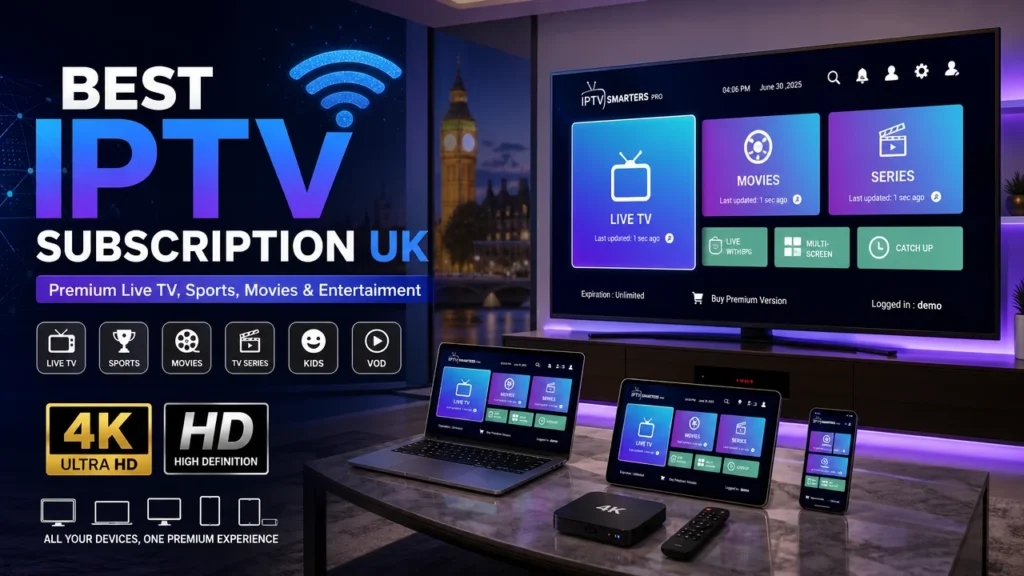
IPTV Services Compared: Pros, Cons, and Key Metrics
When evaluating IPTV services, the key metrics are channel count, video quality, device compatibility, uptime reliability, and price. The comparison table below positions a top-tier IPTV service against standard cable and free IPTV alternatives.
| Feature / Metric | Top-Tier IPTV Service | Standard Cable | Free IPTV / Unverified |
|---|---|---|---|
| Monthly Cost | $10–$15 | $60–$120 | $0 (but unreliable) |
| Channel Count | 20,000+ | 200–400 | 1,000–5,000 |
| Video Quality | 4K FHD / HD | Up to 1080p | 480p–720p |
| Device Support | Smart TV, Firestick, Android, iOS, Windows, MAG | Set-top box only | Limited, often mobile-only |
| Uptime Reliability | 99.9% | 99.9% | Unstable, frequent buffering |
| VOD Library | 40,000+ titles | Limited, pay-per-view | Minimal, often broken links |
| Customer Support | 24/7 live chat | Phone, appointment required | None |
Pros and Cons of IPTV Services
✓ Pros — What You Gain
|
✗ Cons — Limitations to Consider
|
Cost-Benefit, Who It's For, and Buyer Considerations
IPTV subscriptions typically range from $10 to $20 per month. Annual plans often bring the effective cost down to $8–$12 per month. Compare that to the average US cable bill of $83 per month, and you are looking at annual savings of $850–$900 per household. Even when you factor in the cost of a high-speed internet connection (which most households already have), the total cost of ownership remains substantially lower than cable or satellite.
The value proposition extends beyond price. A premium IPTV service replaces multiple streaming subscriptions. Instead of paying separately for Netflix, ESPN+, and international news packages, one IPTV subscription consolidates live TV, sports, movies, and series into a single interface. This consolidation simplifies billing and reduces monthly overhead.
Who Should Buy IPTV Services
- Cord-cutters replacing a $100+ cable package with a $12 IPTV plan.
- Sports fans who want international leagues, pay-per-view events, and premium sports networks without a satellite contract.
- Expats and multilingual households seeking home-country channels that are unavailable through local cable providers.
- Families who want a large VOD library without maintaining four separate streaming subscriptions.
Buyer Considerations Before Subscribing
Internet speed and stability. IPTV is entirely dependent on your connection. For standard HD streaming, a stable 10–15 Mbps is sufficient. For 4K content, 25 Mbps or higher is recommended. You also want low latency and no data caps, as IPTV consumes 1.5–7 GB per hour depending on resolution.
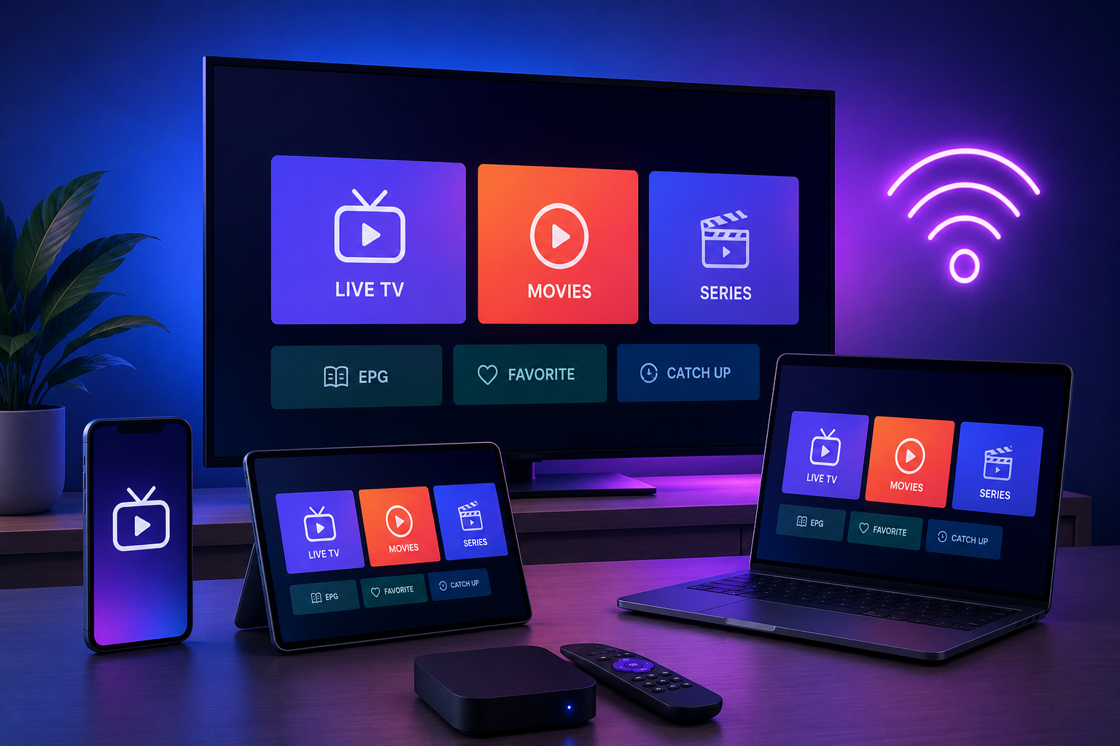
Device compatibility. Confirm that the IPTV service supports the devices you own. Most premium providers support Smart TVs (Samsung, LG, Sony), Amazon Firestick, Android TV/phones, iOS, Windows, and MAG boxes. Some also offer custom APK files for sideloading on Android devices.
Provider reputation and longevity. IPTV is a market with frequent provider turnover. A service that has operated consistently for 3+ years with positive user reviews is a significantly safer bet than a newly launched operation. Look for providers with transparent pricing, clear refund policies, and responsive support.
Trial period availability. A 24-hour free trial is the industry standard for confident providers. If a service does not offer a trial or money-back guarantee, that is a red flag. Use the trial to test channel variety, streaming stability, and EPG accuracy before committing.
Payment security. Reputable IPTV providers process payments through secure gateways and accept credit cards or PayPal. Be cautious of providers that only accept cryptocurrency or wire transfers, as these offer no buyer protection.
The Bottom Line on Iptv Services
After evaluating channel volume, streaming stability, device compatibility, and pricing, the IPTV service recommended in this guide is the strongest option for most cord-cutters. Its combination of 20,000+ live channels, 4K streaming, and 24/7 support at a competitive monthly price makes it the safest choice for readers who want a reliable cable replacement.
Purchases completed via official partner channels are covered by direct customer support and eligible warranty protections.
Frequently Asked Questions
Are IPTV services legal?
IPTV technology itself is legal — many telecom companies offer IPTV to their subscribers. However, services that stream copyrighted content without proper licensing are illegal in most jurisdictions. Always choose a provider that holds distribution rights for the content it offers. A reputable provider will be transparent about its licensing and content sourcing.
What internet speed do I need for IPTV services?
For standard HD streaming, a stable 10–15 Mbps connection is sufficient. For 4K content, 25 Mbps or higher is recommended. You also want low latency and no data caps, as IPTV consumes 1.5–7 GB per hour depending on resolution. A wired Ethernet connection or a strong 5 GHz Wi-Fi signal will reduce buffering.
Can I use IPTV services on multiple devices?
Yes, most premium IPTV providers support multiple simultaneous connections. A standard plan typically allows 1–2 connections, while family plans can support 3–4 devices at the same time. Check the provider's connection policy before subscribing, especially if you plan to share the account across household members.
What channels are typically included in IPTV subscriptions?
A top-tier IPTV subscription includes 20,000+ live channels spanning news, sports, entertainment, kids' programming, and international content from over 100 countries. Sports packages often include premium networks like ESPN, beIN Sports, Sky Sports, and DAZN. Many providers also include regional and local channels depending on your location.
How much do IPTV services cost per month?
IPTV subscriptions typically range from $10 to $20 per month. Annual plans often reduce the effective monthly cost to $8–$12. Compare that to the average US cable bill of $83 per month, and the savings are substantial. Some providers also offer shorter-term plans and 24-hour trial passes for testing.
Do IPTV services work with VPNs?
Yes, most IPTV services work with VPNs. In fact, using a VPN is recommended for privacy and to prevent ISP throttling. Choose a VPN with fast servers and strong encryption. Some providers may block known VPN IP addresses, so select a provider that explicitly allows VPN usage in its terms of service.
What's the difference between IPTV and traditional cable?
Cable transmits broadcast signals over coaxial or fiber-optic infrastructure to a set-top box. IPTV sends video data packets over the internet to any compatible device. IPTV offers more channels, more device flexibility, lower cost, and on-demand content — but depends on your internet connection quality. Cable works even during internet outages but locks you into a single screen and a much higher bill.
How do I set up an IPTV service on my Smart TV?
Most Smart TVs support IPTV through apps like IPTV Smarters Pro or Smart IPTV. Download the app from your TV's app store, enter the M3U URL or Xtream Codes credentials provided by your IPTV provider, and the channel list loads automatically. Some providers also offer dedicated APK files for Android TVs, which can be sideloaded for a more integrated experience.
Transparency & Disclosure: We independently evaluate products. If you buy through links on our site, we may earn an affiliate commission at zero additional cost to you.