By Analyst Team · Updated 2026-08-11 · 16 min read
The promise sounds irresistible: thousands of live channels, every major sports league, the latest movies on demand, and a monthly bill that looks like pocket change. That is why millions of households have switched to IPTV services in the last few years. The uncomfortable truth, however, is that a large share of those buyers chose their provider in under fifteen minutes and regretted it within the first month. The difference between a service that feels rock-solid and one that buffers every evening comes down to a handful of simple checks that most people never perform. The dashboard shown above gives you a clear idea of a well-organized IPTV services layout, but the real quality lives behind the interface, in server infrastructure and provider accountability. This guide covers the nine checks that separate genuinely reliable IPTV services from the ones that will have you crawling back to your old cable company.
Why Many People Regret Their Choice
Wasted money is the headline complaint. A typical subscription runs between €8 and €25 per month, but the true cost of a bad decision is not the invoice — it is the disruption. Buyers describe a familiar pattern: the service performs beautifully during a 24-hour trial, then degrades the moment payment is confirmed. Channels start freezing, stream quality drops during evening peaks, and support tickets disappear into a void.
Content instability is the second-biggest source of regret. Many IPTV services advertise staggering channel totals, but a significant portion of that list is often duplicated or dead. When a provider loses a stream source, entire categories can vanish overnight. If you rely on that provider for your Saturday football or your home-country news channel, one bad update is enough to ruin the whole week.
A third group regrets the technical complexity. Some IPTV services require manual M3U playlist configuration, electronic program guide setup, and side-loaded apps. If the buyer expected a plug-and-play experience, the setup process can feel like a part-time job. Understanding these failure points before you buy is what separates a smooth experience from a frustrating one.
If you want to skip the research and go straight to the most widely reviewed provider this year, our current #1 recommendation is below.
See Our #1 Rated IPTV Service →LIMITED TIME AVAILABILITY
Unlock Full iptv services Access
Unlock complete high-definition information and priority access packs. Lock in your pricing model today before plans return to standard regional metrics.
The Five Criteria That Should Drive Your Decision
Instead of obsessing over raw channel counts, evaluate IPTV services the way you would evaluate a broadband plan. Channels are the content, but the delivery is the product. These five criteria matter more than the size of the channel list.
Server Reliability and Uptime
Look for providers that guarantee at least 99% uptime. The most honest signal is found in independent reviews: search for the words "buffering" and "down" before you search for "channels." A service with 20,000 channels that freezes every evening is worthless compared to a 3,000-channel provider that delivers each one flawlessly. Ask where the servers are hosted and whether they have redundant infrastructure for peak hours.
EPG Accuracy
The Electronic Program Guide is the on-screen schedule you use to navigate. Many IPTV services include an EPG, but it is often incomplete or simply wrong. A genuinely excellent provider keeps its guide data updated in real time, so you can browse what is actually playing rather than guessing from memory. Inaccurate EPG data is one of the most common complaints in IPTV services review 2026 threads across user forums.
Simultaneous Connections
How many screens can watch at the same time? A family with two televisions, a tablet, and a phone needs at least two or three simultaneous connections. A single-connection service is fine for one person, but a dealbreaker for households. Ask this directly before you pay — and get the answer in writing, because vague phrases like "multiple devices" usually mean something narrower than you expect.
Device Compatibility
Every household has different hardware. Some IPTV services excel on Android boxes and Fire Stick devices but fail on Apple TV or newer Smart TVs. Before ordering, verify that your exact device model is supported. The best providers offer native apps for multiple platforms rather than forcing you to configure third-party players with custom URLs.
Customer Support
The quickest test of a provider's quality is to send a pre-sales message. Ask a simple question and measure the response time. A provider that takes three days to answer a prospective customer will take even longer when your channels drop on a Saturday night. Look for ticketed support systems or verified email addresses rather than informal chat groups that can vanish without trace.
What You Need to Know About the Current Market
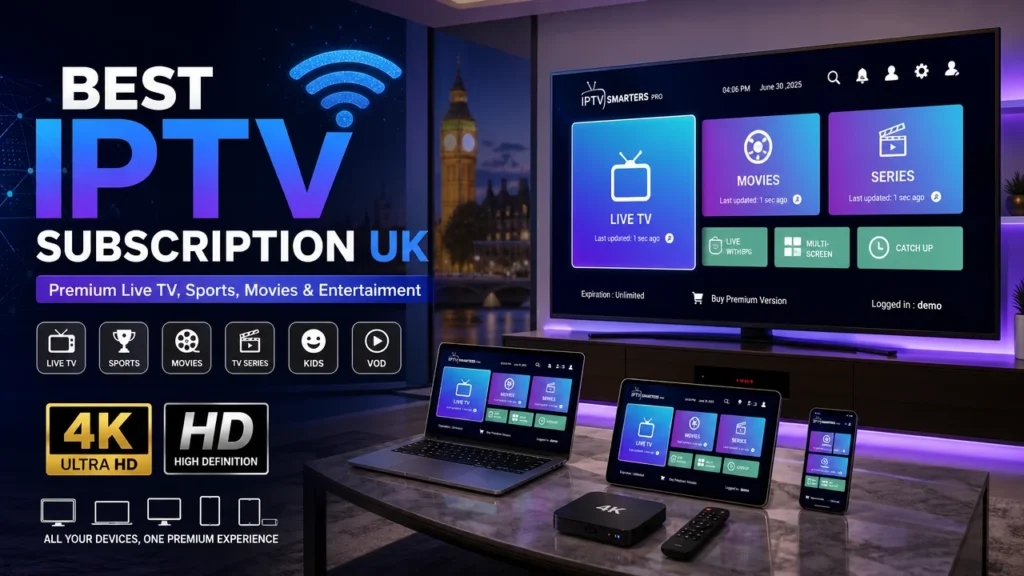
The IPTV services market in 2026 has split into three distinct categories. First are fully licensed streaming platforms — the official apps operated by broadcasters themselves. They are dependable and legal, but they rarely offer the international breadth that IPTV buyers want. Second are premium IPTV services that focus on one key niche: live sports. As you can see in the broadcast shown above, these services have invested heavily in delivering 4K-quality live matches with real-time EPG updates. They are the closest thing to a cable replacement that exists today.
Third, and by far the largest in volume, are grey-market services that aggregate channels without formal licensing. The grey-market sector dominates consumer searches for IPTV services, but it is also where most disappointments happen. Prices look seductive, but there is no accountability, no refund mechanism, and no quality guarantee. Understanding which of the three categories you are buying into is the fastest way to set realistic expectations.
Most buyers who switch to a premium IPTV provider save 30–50% compared to their previous cable bill. Compare the current deals to see what fits your budget.
Compare Current IPTV Deals →Secure special promotional rates instantly before the window closes.
Activate Your IPTV Services Subscription Now →Questions to Ask Before Buying
No matter which provider you are evaluating, ask these direct questions before you hand over payment:
- Where are your servers located? Regional server placement matters because distance directly impacts latency and buffering.
- Do you offer a free trial? Reliable providers always do. Anyone who refuses is hiding something.
- How many simultaneous streams are allowed? Get the exact number, not a vague "multiple devices" promise.
- Is the EPG included? If not, decide whether you are willing to configure a third-party electronic program guide.
- What is your refund policy? Get it in writing. If there is no refund policy, assume the sale is final.
- Which devices are officially supported? Test with your exact model number before paying.
Warning Signs to Spot
Here are five signals that should make you walk away from an IPTV services provider immediately:
Unrealistic Pricing
A lifetime subscription for €30 is not a bargain; it is a business model that collapses within months. Hosting quality IPTV services costs real money — server bandwidth, infrastructure maintenance, and content sourcing all add up. If the price seems too good to be true, the service will disappear long before your annual plan expires.
No Trial Period
Providers with a broken product do not offer trials. A serious provider knows that once you see the quality, you are far more likely to stay. Never buy without testing first, even if the price is small.
Cryptocurrency-Only Payment
While some legitimate providers offer crypto as one option among many, a provider that exclusively accepts cryptocurrency is building a structure with zero accountability. If a dispute arises or the service fails after a week, you will have no chargeback mechanism and no consumer protection.
Overwhelming Channel Promises
Be suspicious of any provider that promises "every channel in the world" or "100,000+ channels." Massive numbers usually mean duplicated sources, dead streams, and a poor overall experience — just a few thousand well-maintained channels beat a bloated list every time.
No Support Infrastructure
If the only support channel is an obscure Telegram group, ask yourself what happens when that group is deleted. Legitimate IPTV services maintain ticket systems, email support, and in some cases phone support for premium tiers. The absence of any formal support structure tells you everything about their long-term commitment.
Comparison Table of Available Options
The table below compares the main types of IPTV services on the market today. Use it as a quick reference before you start evaluating specific providers.
Strengths and Weaknesses of IPTV Services
Before you commit, weigh the fundamental trade-offs:
Pros
- Lower monthly cost compared to cable or satellite, especially for international packages.
- Flexible device support: watch on TV, tablet, phone, or laptop anywhere.
- Huge variety of channels, including niche sports and regional programming not available locally.
- No contracts: most providers let you cancel or stop payments at any time.
Cons
- Dependent on broadband quality: a weak connection means constant buffering.
- Legal gray area for some providers, particularly in countries with aggressive IPTV enforcement.
- EPG inaccuracies remain a recurring pain point even on premium services.
- Support varies wildly: some providers solve issues in minutes, others disappear for days.
Recommendations by Budget and Needs
Budget-Focused Buyers (Under €12/month)
Look for family-oriented plans that include local channels and a reliable EPG without paying for premium sports content you will never watch. The goal here is consistency over variety. A modest channel list that works flawlessly is worth more than a massive list that buffers every evening.
Sports Enthusiasts (€15–€25/month)
Sports is where IPTV shines, but it is also where the cheapest providers fail. The best IPTV services for sports invest heavily in 4K broadcast infrastructure, multi-bitrate streaming, and real-time updates. Look for services that offer 4K football matches and score overlays, since these features require serious engineering on the provider side.
Expats and International Viewers (€10–€18/month)
Test the specific channels you care about during the trial and check latency, because long-distance streaming from home-country servers can be inconsistent. The best IPTV services for international channels maintain dedicated routing for specific regions, which makes a noticeable difference in channel loading times and picture stability.
Families with Multiple Devices (€15–€25/month)
Prioritize three or more simultaneous streams, parental controls, and a dependable EPG. An affordable IPTV service for families is only a bargain if everyone can watch different content at the same time across different screens. Confirm the simultaneous stream limit in writing before you subscribe.
Final Subscription Window:
Start Your IPTV Services Subscription Today →Affiliate Disclosure: Clicking this secure link verified by our network supports our team through standard partnership terms at zero extra cost to your invoice.
How to Maximize Your Investment
Once you have chosen a provider, the following steps will help you get the most out of your subscription:
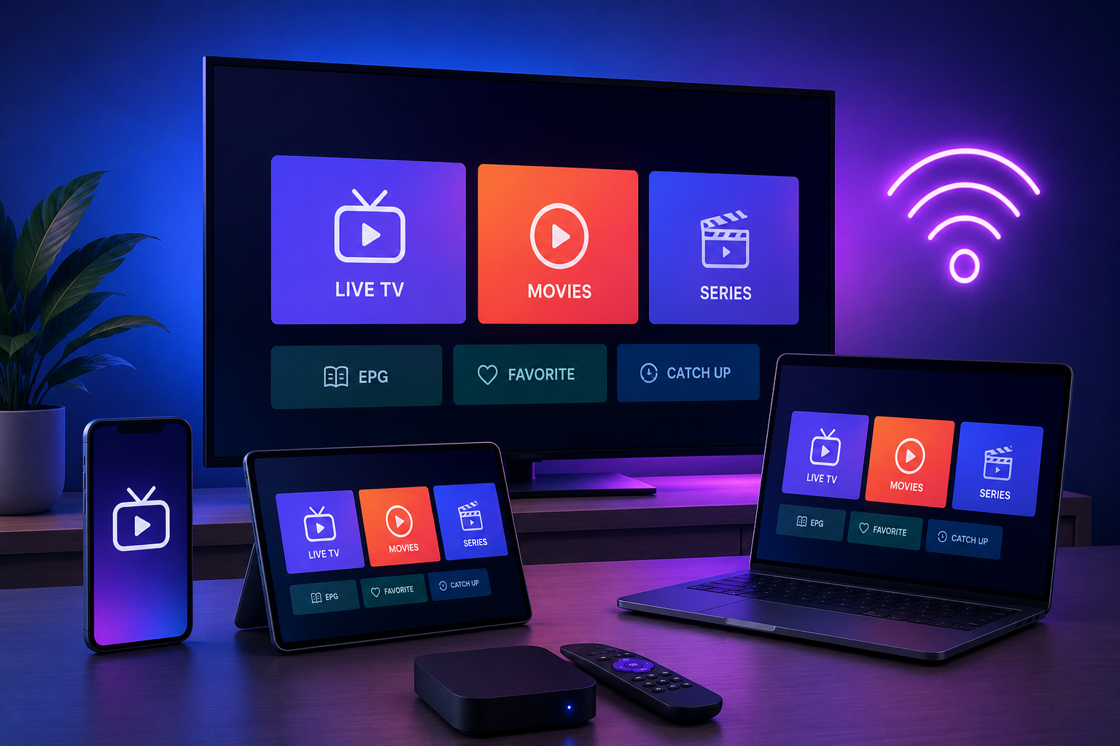
First, connect your main viewing device via Ethernet cable rather than Wi-Fi. As the diagram above illustrates, IPTV services rely entirely on your internet connection, so every dropped wireless packet translates into a frozen screen. A simple cable will eliminate the vast majority of buffering complaints that users mistakenly blame on their provider.
Second, use a VPN if your provider operates in a legally grey area, especially in countries with active IPTV enforcement. A good VPN also prevents your internet service provider from throttling streaming traffic, which is a real issue in some regions. Choose a VPN with fast servers near your physical location to avoid adding latency.
Third, invest time in configuring the EPG properly. The default settings often miss channels or show incorrect times, and a few minutes of manual setup will make the guide significantly more accurate. Add parental controls if you have kids — every family plan should include basic content filtering.
Fourth, never give a provider your full annual fee before at least one month of service. Many providers offer discounts for paying annually, but wait until you trust them. The monthly price difference is small enough that it is not worth the risk of losing your entire year's payment in one go.
Finally, set a calendar reminder to audit your channel lineup every month. A good IPTV services subscription should evolve with the seasons — sports packages change, local channels come and go, and quality fluctuates. Being an active customer early on means providers prioritise your account, which often translates into faster support responses.
Frequently Asked Questions
What are the best IPTV services for sports?
For sports fans, the best IPTV services in 2026 are those that invest heavily in 4K broadcast infrastructure and reliable multi-bitrate streaming. Services that partner with sports aggregators provide the most consistent match-day experience, with options for major European leagues, UFC pay-per-view, and North American franchises. Avoid providers that list dozens of sports channels but fail to deliver a stable stream on a Saturday afternoon.
How do I find reliable IPTV services that don't buffer?
Buffering almost always points to weak server capacity rather than your internet connection. Check independent reviews for mentions of buffering during evening peak hours, then look for providers that disclose their server locations and offer a meaningful free trial. Use the trial to test during peak times, not just in the afternoon. A provider that passes the 8 PM test on a weekend will likely serve you well all year.
Do IPTV services with local channels really exist?
Yes, many regional providers specialise in local channels for specific countries or municipalities, but coverage varies considerably. A well-established provider usually carries the main national broadcasters of the UK, USA, Canada, Australia, and several European countries. Always test the exact local channels you need during the trial period, because two providers can use completely different source feeds with very different quality and reliability. Expect lower resolution on local channels compared to premium sports or flagship international networks.
Where is the best place to buy IPTV services?
The safest place to buy IPTV services is directly from the provider's own website rather than through social media resellers. Resellers often disappear, rebrand, and change plans without notice. Direct providers typically have a ticket system, documented refund policies, and a longer track record you can verify. Never buy through unverified Telegram channels or random posts on Facebook Marketplace. If you are searching for a trusted starting point, our recommended provider list above is a solid baseline to compare against.
Are there affordable IPTV services for families with multiple TV sets?
Several providers now offer family plans that include three to five simultaneous connections at a price of €15 to €25 per month. Look for plans that explicitly state matching connections, because you do not want to discover your second TV freezes later in the day. Some providers also offer parental controls, which is crucial for families with young children. Ask the provider directly whether all streams can use different channels at the same time.
How do IPTV services in 2026 compare to cable?
The 2026 generation of IPTV services has closed most of the gap with cable in terms of picture quality and channel selection, and it is significantly better on price. The main disadvantages are the occasional EPG inaccuracy, a dependence on your home internet quality, and the absence of a single official phone number to call when things go wrong. For expats who want home-country channels, IPTV has no serious competition. For a family that just wants the local evening news, cable might still be the lower-hassle choice.
Which IPTV services are best for international channels?
The best IPTV services for international channels are those with dedicated interest groups for expat communities — particularly South Asian, Arabic, Filipino, African, and Eastern European content. These providers usually invest more in the niche channels that mainstream platforms ignore, and they understand the specific server routing needed for smooth long-distance streaming. During the trial, test channels from three different regions to judge the overall breadth. Also check whether the EPG shows original-language metadata.
What internet speed do I need for IPTV services with no buffering?
For a single HD stream, you need at least 10 to 15 Mbps of steady bandwidth. For 4K streams, plan on 25 Mbps or higher per screen. Speed itself is rarely the problem though — jitter, packet loss, and Wi-Fi interference cause most IPTV buffering. Connect your streaming device with an Ethernet cable and use a quality router to minimise packet loss. When multiple people in the house stream at the same time, make sure your plan has enough bandwidth to cover all of it.