By Daniel R. · Updated 2026-08-19 · 12 min read
The diagram above shows the basic flow: a content source, a provider server, your home router, and an app that decodes the stream. At its core, how does iptv work is less about cables and more about packet delivery. Your provider converts channels or on-demand files into compressed digital data, then pushes that data through your internet connection. When you open a playlist or electronic program guide, the app requests a stream from the server and plays it back in near real time.
That part is easy to grasp. The harder part is that reliability depends on something cable never had to worry about: shared bandwidth and server capacity. If a provider oversells capacity, your stream stutters during peak hours. If your route to the server is long or congested, live sports can lag by several seconds. Knowing this before you pay is not optional. It is the foundation of every buying decision that follows.
Why Many People Regret Their IPTV Choice
The most common regret is not a complete service failure. It is a slow realization that the provider's promise and the evening reality do not match. A buyer may test a service at noon, when the network is quiet, then find that the same live sports channel buffers constantly at 8 p.m. That happens because IPTV capacity is shared across many users, and some providers oversell access without enough server headroom.
Another frequent regret is inaccurate channel lists. A provider may advertise thousands of channels, but the buyer discovers only a few dozen are stable, and the rest are duplicates, dead feeds, or low-resolution international streams. For live sports fans, that gap is painful. A best iptv service for live sports should show whether key sports packages, catch-up features, and multi-view options actually work on match day, not just on a static channel list.
Some people also regret choosing a service that works poorly on their main device. They assume every IPTV provider automatically works on a smart TV or Firestick, but that is not always true. You may need a specific app, a sideloaded APK, or a particular player. If the provider does not offer clear setup guides or responsive support, the purchase can become a technical project instead of a plug-and-play upgrade.
Finally, there is the legal gray area. Buyers in the US sometimes realize too late that the service they bought is unauthorized and could disappear without warning. Technology-wise IPTV is legal; the legality of a specific service depends on whether the provider actually licensed the content. That distinction matters more than many sellers admit, and it should influence where you feel comfortable spending money.
Criteria That Should Drive Your Decision
Before comparing providers, write down the three shows, leagues, or channels you actually watch every week. That list is more useful than any giant channel count. Then evaluate each service against the following criteria:
How Does IPTV Work on Smart TV Without Extra Boxes
Most modern smart TVs can run an IPTV app directly, but they are not all equally supported. Samsung and LG use Tizen and webOS, which have fewer third-party IPTV apps than Android TV or Google TV. If your main screen is a Samsung or LG, you may need a streaming stick or must check which apps the provider supports. On Android TV, services often supply an APK or recommend an app like TiviMate or IPTV Smarters. Ask the provider whether their playlist uses Xtream Codes, M3U, or MAC portal format. That detail determines whether setup will take five minutes or forty.
Live Sports Stability and Catch-Up
For live sports, the critical test is not the number of channels but the provider's behavior under load. A good provider may offer 24-hour catch-up, rewind, and multiple quality streams so a buffering moment does not force you to miss a goal. If you mainly watch soccer, boxing, or F1, ask about specific event coverage and whether there are backup channels for major pay-per-view moments. The best iptv service for live sports is rarely the one with the longest channel list; it is the one with consistent, discreet sports categories and reliable servers during high-demand windows.
Device Support Before You Pay
Check whether the provider supports your devices directly. If you plan to watch on a Firestick, the provider should have instructions for sideloading the app or an official app in the Amazon Appstore. Some services also offer a web player, which is useful for laptops and tablets. If a provider cannot name the exact apps or file formats they use, that is a warning sign.
The strongest buying framework is simple: choose three non-negotiable channels, confirm device support, ask for a trial, and then test during the exact hours you normally watch. Do not decide based on a 10-minute midday demo.
✓ Benefits & Pros of IPTV
Massive channel variety beyond traditional cable packages.
Watch on multiple devices, including smart TV, Firestick, phone, and tablet.
Often lower monthly cost than premium cable or satellite bundles.
On-demand movies and series usually built into the same interface.
✗ Limitations & Cons of IPTV
Reliability depends heavily on your home bandwidth and provider server capacity.
Some services operate in legal gray zones and can vanish without notice.
User interfaces and EPGs vary widely; some are clunky or poorly translated.
Customer support is often slower than cable or mainstream streaming services.
RECOMMENDED RESOURCE
how does iptv work
See current details, seasonal promos, and full tier packages before committing to any subscription.
Learn more about how does iptv work →IPTV vs Cable: Which Is Better for Most Homes
The honest answer is not one-size-fits-all. Cable or satellite still wins for absolute channel stability, no dependence on your internet connection, and simpler support. But IPTV is often better for people who want more international content, multi-device viewing, and a lower monthly bill. The trade-off is that IPTV shifts responsibility to you: your router, your connection speed, and your willingness to troubleshoot.
If you already use a fast, stable fiber or cable broadband connection and you do not want to pay for hundreds of channels you never watch, IPTV can feel like an upgrade. If your household has unreliable Wi-Fi or you expect channel-surfing with zero buffering, a traditional provider may still be the safer route. Understanding how does iptv work on smart tv versus cable clarifies why this is a network-dependent purchase more than a simple content purchase.
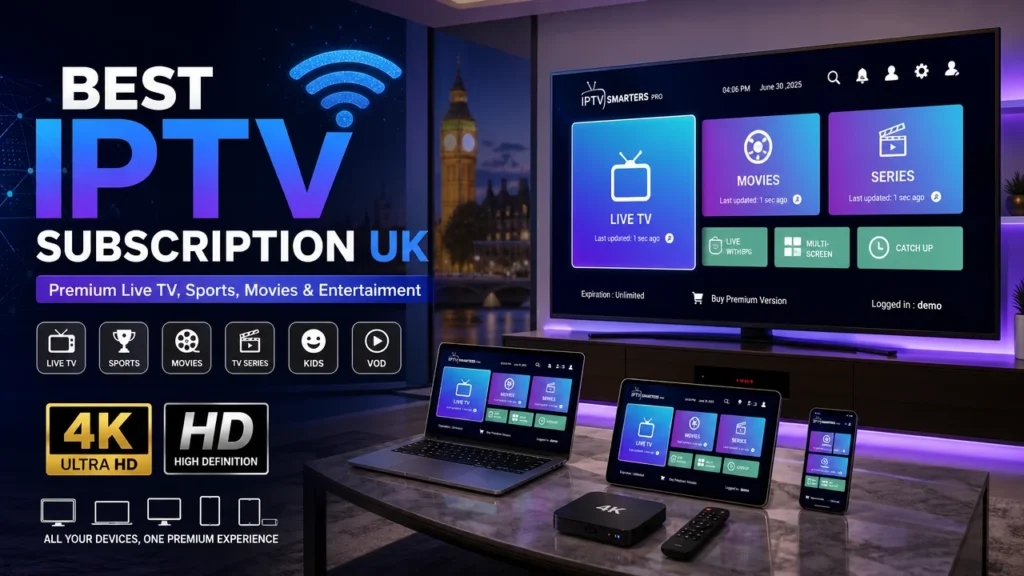
The image above shows what a practical IPTV interface should look like: stable categories, a readable electronic program guide, and visible stream quality settings. If a provider's demo or trial looks dramatically worse than this, trust the preview. You are not going to fix a messy back end with a stronger router.
What You Need to Know About the Current Market
The IPTV market is crowded, and public reviews can be manipulated. Some sellers flood forums with one-line praise, while competitors post exaggerated complaints. Instead of relying on a single source, scan discussions on Reddit for terms like iptv review reddit 2025 and look for patterns: repeated buffering complaints, sudden shutdowns, or support that disappears after payment. Patterns matter more than individual raves.
Is iptv legal in the us is another question that deserves a direct answer. The technology itself is legal, and many IPTV services carry properly licensed content. However, some services sell access to channels they have not licensed, which puts the provider and potentially the subscriber in a legal gray zone. Legitimate services are typically transparent about their source and may cost more. If a deal looks too good to be true, the content is likely unauthorized.
When researching where to buy reliable iptv subscription, look for services that offer a short trial, clear refund terms, and support channels that respond within a day. A provider that refuses a paid trial or does not list its supported apps is not likely to become more reliable after you hand over a year of subscription fees.
Questions to Ask Before Buying
These ten questions cut through marketing language and expose whether a provider understands its own infrastructure.
- What streaming protocols do you support? Xtream Codes, M3U, and MAC portal are common. The answer affects which apps you can use.
- Do you have a 24-hour catch-up and multi-view feature for live sports? Without catch-up, a buffering moment means missed action.
- Which devices do you officially support? Ask specifically about Firestick, Samsung, LG, Android TV, and iOS.
- Where are your servers located? Closer or more distributed servers often mean less latency for US subscribers.
- What is your monthly bandwidth requirement? A stable 20–25 Mbps for HD is typical, but 4K needs more.
- Can I purchase a 24-hour or 7-day trial? A paid trial that works at peak hours tells you more than any screenshot.
- Do you provide an EPG or TV guide? A missing or messy guide makes the service feel broken even when streams work.
- What is your refund policy? Legitimate services usually offer a short window for refunds, not indefinite promises.
- How do you handle major pay-per-view events? This reveals whether the provider adds dedicated backup servers for high demand.
- Is your content properly licensed? If the answer is evasive, protect yourself with a shorter subscription.
Warning Signs to Spot Before You Pay
Some red flags are immediate. A provider that only accepts payment in cryptocurrency or wire transfer may be hard to reach if something goes wrong. A provider that claims every channel in the world in 4K for ten dollars a month is almost certainly overselling. If the trial closes after a few minutes of testing or the customer support chat disappears after purchase, do not subscribe for a full year.
Another warning sign is the absence of any documentation on how to set up IPTV on Firestick or other devices. A legitimate service wants you to connect successfully because it reduces support tickets. If the provider sends only a vague message and a link, you are on your own. The same applies to buffering fixes. A good provider should be able to explain basic troubleshooting steps, not just tell you to buy a faster plan.
Beware of fake urgency. Phrases like “only 10 licenses left at this price” are designed to make you skip the very checks described above. Reliable providers occasionally run seasonal promotions, but a constant countdown timer is a sales script, not a technical feature.
Comparison of IPTV Options by Key Criteria
The table below compares four common paths: traditional cable or satellite, mainstream streaming TV, a reliable independent IPTV subscription, and free or unverified IPTV. Use it as a filter for your own priority list.
Read independent network latency reviews and hardware specs before choosing a provider.
Find Out More About how does iptv work →Recommendation by Budget and Needs
If your main priority is domestic US sports and you never want to troubleshoot your entertainment, a traditional cable package or a mainstream streaming service is still the safest choice. You pay more, but you get stable local channels and straightforward support.
If your budget is under thirty dollars a month and you want international channels, niche sports, or multi-device viewing, a reliable independent IPTV subscription becomes more attractive. Choose a provider with a short paid trial, clear setup guides, and a responsive support channel. For live sports fans, prioritize services that demonstrate catch-up and backup channels for major events rather than relying on a giant channel count.
If you are brand new to IPTV, start with a one-month plan. Even if a year plan looks economical, a monthly plan protects you if the service quality drops or your household needs change. You can always renew once the provider proves reliable during your actual viewing hours.
How to Maximize Your IPTV Investment
The best provider still performs poorly on a congested Wi-Fi network or an outdated streaming stick. These five steps directly address the most common problems people report.
- Use Ethernet instead of Wi-Fi for your main TV. A wired connection removes most local network buffering and keeps the stream stable during peak hours.
- Learn how to set up IPTV on Firestick correctly. Enable apps from unknown sources, install a recommended player like IPTV Smarters or TiviMate, and enter your Xtream or M3U credentials carefully. A small typo can make the entire playlist fail.
- Follow a practical IPTV buffering fix guide. Restart your router, change the player's buffer size if available, switch from HLS to MPEG-TS, or reduce the stream quality from 4K to 1080p during heavy traffic.
- Update your DNS and test different server portals. Some providers offer several server URLs; switching from one to another can bypass a congested route.
- Schedule major events as a test. Use a pay-per-view or live match as your real stress test. If the service survives that, it will likely handle regular evenings.
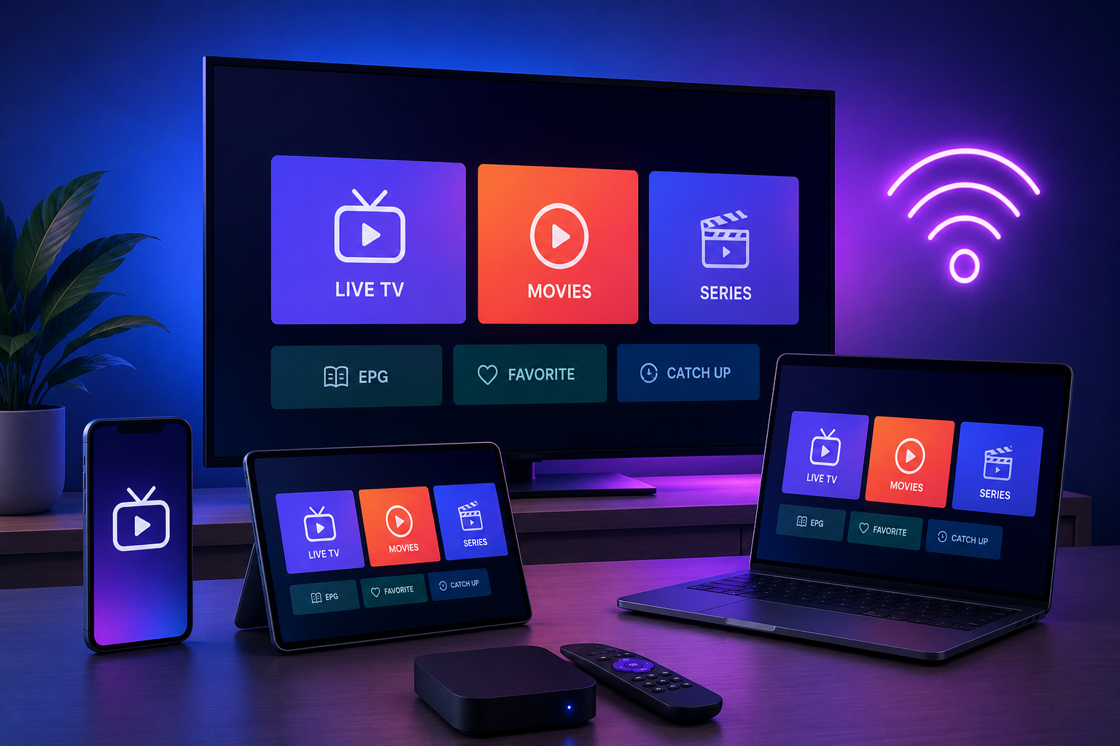
The image above illustrates why your home setup matters as much as the provider. The provider controls the server; you control everything from the router to the player. A buyer who skips this half of how does IPTV work will blame the service for problems that are actually local.
Final Word Before You Buy
Start with one clear goal, not a giant channel list. Decide which three channels or leagues you cannot live without, confirm the provider supports your devices, and test during the hours you actually watch. That process eliminates most bad purchases before they happen.
How does IPTV work matters because the answer tells you what can go wrong. When you know the stream depends on shared servers and your own network, you stop chasing impossible promises and start asking the right questions. A reliable IPTV subscription can be a genuinely flexible and affordable alternative to cable, but only when you buy with criteria instead of impulse.
Featured Streaming Selection:
Explore how does iptv work Plans →Affiliate Disclosure: Clicking this secure link verified by our network supports our team through standard partnership terms at zero extra cost to your invoice.
Frequently Asked Questions
This article contains affiliate links. Our editorial analysis remains independent.